The archived papers and AMA describe combining AI computation with mining. The September record adds an FP8 proposal and internal benchmark claims.
Hear the benchmark claim ↗FIELD STUDY / 04COMPUTATION × ECONOMICS
THE PEARL MECHANISM
One operation.
Two worlds.
An AI answer. A mining attempt.
Pearl’s big idea is to make the same computation participate in both.
An independent field guide to the mechanism,
the economic bet, and the evidence still missing.
THE QUESTION AT THE CENTRE
What if the work
could do more?
Inference produces an AI answer. Mining competes for block rewards. Duplex is Pearl’s name for bringing an inference computation and a mining attempt into one operation.
The mechanism is only the beginning. Integration costs, performance, customer demand and reward economics decide whether the idea works in practice.
Open the research brief
THE INVESTIGATION / READ THE CASE BEFORE THE EXHIBITS
Can one computation create two useful outputs?
The thesis is that mining rewards could improve useful-compute economics. The countercase is that integration costs, reward variability, and deployment constraints may outweigh that benefit.
A published scheme is not a deployed network feature. Internal benchmark statements do not establish results across real workloads or prove customer demand.
Reproducible workload benchmarks, a documented activation, and independently observable adoption would connect the mechanism to the economic thesis.
Historical September briefing; new research sections below identify their sources and observation dates.
Inspect the original exhibits ↓01 / FOLLOW THE WORK
Inside the
two-for-one.
Start with a question. Follow the computation. Discover where Pearl enters the picture.
An illustrated explanation of the proposed flow, not a live trace or a guarantee of rewards. Each stage opens its own technical note.
01THE REQUESTA question arrives.
A person or application sends input to an AI model. The serving system prepares the request and schedules the model’s work.
Listen: the vLLM integration dream ↗Earlier community call · 25:59 · recording and transcript
02THE GPUThe model becomes matrix work.
Layers transform the input through matrix operations and other computations. Kernels organize that work around the hardware’s memory and compute resources.
Explore the kernel workshop ↗03THE PEARL INTEGRATIONEligible operations do a second job.
The construction lets eligible matrix work participate in mining. The floating-point proposal extends the engineering into a new numeric format; its publication and network activation are separate milestones.
Listen: the team’s overhead claim ↗September 15 AMA · 16:36 · internal benchmark claim
Inspect the FP8 proposal ↗04THE OUTPUTSAn answer. A chance at a reward.
The application receives the AI result. A successful mining attempt can also earn a block reward after network acceptance. A single customer request does not guarantee a winning attempt.
Follow the economics ↗Mechanism reference: original construction paper.
Schematic, not to scale. The displayed stages simplify a serving pipeline; they do not imply every operation participates in mining.
02 / THE TRANSITION · 25 SEPTEMBER 2026
What changes
with Pearl-GEMM?
A dated protocol update from Omri Weinstein
The new statement makes the transition more concrete: from an integer-only protocol to native floating-point workloads on Blackwell, with substantially lower claimed overhead.
INT8 and 10–15% overhead.
Omri describes the then-current protocol as INT8-only, limiting compatibility with models running native floating-point datatypes.
Native FP. Blackwell. 0–3%.
He describes the new Pearl-GEMM as model-agnostic, supporting native floating-point computation on Blackwell, with 0–3% end-to-end overhead. These are reported performance figures, not measurements reproduced by Pearlified.
In testnet. Mainnet still ahead.
The September 25 reply says the protocol is already in testnet and expected to launch within weeks. That is a dated expectation, not a confirmed activation date.
Read the complete September 25 reply ↗
The workload examples—and what would verify them
Omri reports approximately zero overhead on DeepSeek V4 Flash and says the team’s MoE kernels outperform Quack, with Pearl’s vLLM beating optimized open-source vLLM/SGLang on many workloads even with mining. The reply does not by itself supply a reproducible comparison. Hardware, model versions, precision, batch sizes and benchmark configurations would be needed to evaluate those claims.
WHERE THIS LEAVES THE INVESTIGATION
- What we know
- The September 25 team statement places Pearl-GEMM in testnet and describes native floating-point support on Blackwell.
- What remains open
- When will mainnet activation be documented, and which performance claims can be reproduced?
Performance figures below are attributed to the team and the supplied record; they were not independently reproduced in this review. Specification publication does not imply mainnet activation. Track activation ↗
The 2-for-1, in writing
EXHIBIT F · THE MODELDuplex work aims to combine an inference result with a mining attempt. A useful output can coexist with a chance of earning block rewards; it does not guarantee a second payment. Rafael Pass studies the incentives in an economics preprint. Read the preprint ↗
The paper that put it in writing
Rafael Pass also gave the full public talk on this paper — produced and published by Pearl Research Labs. Here's the paper, and the passage where he defines "duplex" in his own words.
PAPERarXiv · June 2026
THE ECONOMICS OF
Proof-of-
Useful-Work.
Pearlified’s source card · not the paper’s original cover
Rafael Pass models a proof-of-useful-work economy and discloses consulting for Pearl Research Labs. The September AMA describes him as one of the project’s researchers. Neither establishes an employment contract. The arXiv record does not establish peer review. Publication record ↗
QUOTE · 16:32–16:44from the talk
"They can do this thing referred to as a duplex operation… a joint, a two-for-one operation. It participates in both markets at the same time — it co-produces both mining and inference, but maybe with some overhead."
— Rafael Pass, defining the term live, lightly cleaned up from the auto-generated transcript for readability.
Source: "The Economics of PoUW — Rafael Pass," produced and published by Pearl Research Labs on YouTube. ▶ Hear the surrounding passage from 16:10
Source: "The Economics of PoUW — Rafael Pass," produced and published by Pearl Research Labs on YouTube. ▶ Hear the surrounding passage from 16:10
The interesting part is conditional. Bitconia, Fortessia and Duplexia describe different economic regimes. Demand, costs and overhead affect which activities remain viable. The model does not promise that useful work always wins or that rewards automatically become lower customer prices. Read the assumptions ↗
The model, in one picture
THE MINING MARKETTHE INFERENCE MARKET
01 / M
Mining
Work directed at securing the ledger.
02 / D
Duplex
Participation in both markets, with overhead α, γ.
03 / L
Learning
The model’s standalone AI activity.
RECREATED FROM THE TALK'S "CONJOINT PRODUCTION MARKET" MODEL, IN OUR OWN LAYOUT — NOT A REPRODUCTION OF PASS'S ORIGINAL SLIDE.
FROM THE SEPTEMBER SOURCE FILE
The FP8 proposal — reducing the extra work
EXHIBIT F.2 · SEP 2026The FP8 proposal changes where the mining lottery reads its output and uses randomized quantization. PR #311 opened September 9; the archive records September 14 publicity. Internal per-operation and end-to-end benchmark statements have different scopes and were not independently reproduced here.
AMA · on tapeoverhead
"In our internal benchmarks we see literally zero overhead… we can mine every flop except the non-linearities."
— Ilan Komargodski. Per-GEMM overhead runs ~5–7%; end-to-end it's "much, much less" (deep-seek / flash v4: ~0%). Self-reported; not independently verified.
AMA · on tapedrop-in
"An OpenAI engineer can just take their own in-house, optimized vLLM… and tell their CUDA agent to just 'Pearlify' it. It's very, very close to that scenario."
— Omri Weinstein describes a drop-in integration ambition. The hypothetical OpenAI example is not evidence of OpenAI usage. Removing special preprocessing does not mean removing all quantization. Read the explanation in context ↗
Implementation check / September 21: PR #311 was still open in the inspected record. Review activity does not establish mainnet activation. The September AMA described unfinished Hopper support for the proposed FP8 scheme; that is separate from Hopper support in the existing integer miner. Follow the proposal ↗
◉ The throughput question — relevant expertise
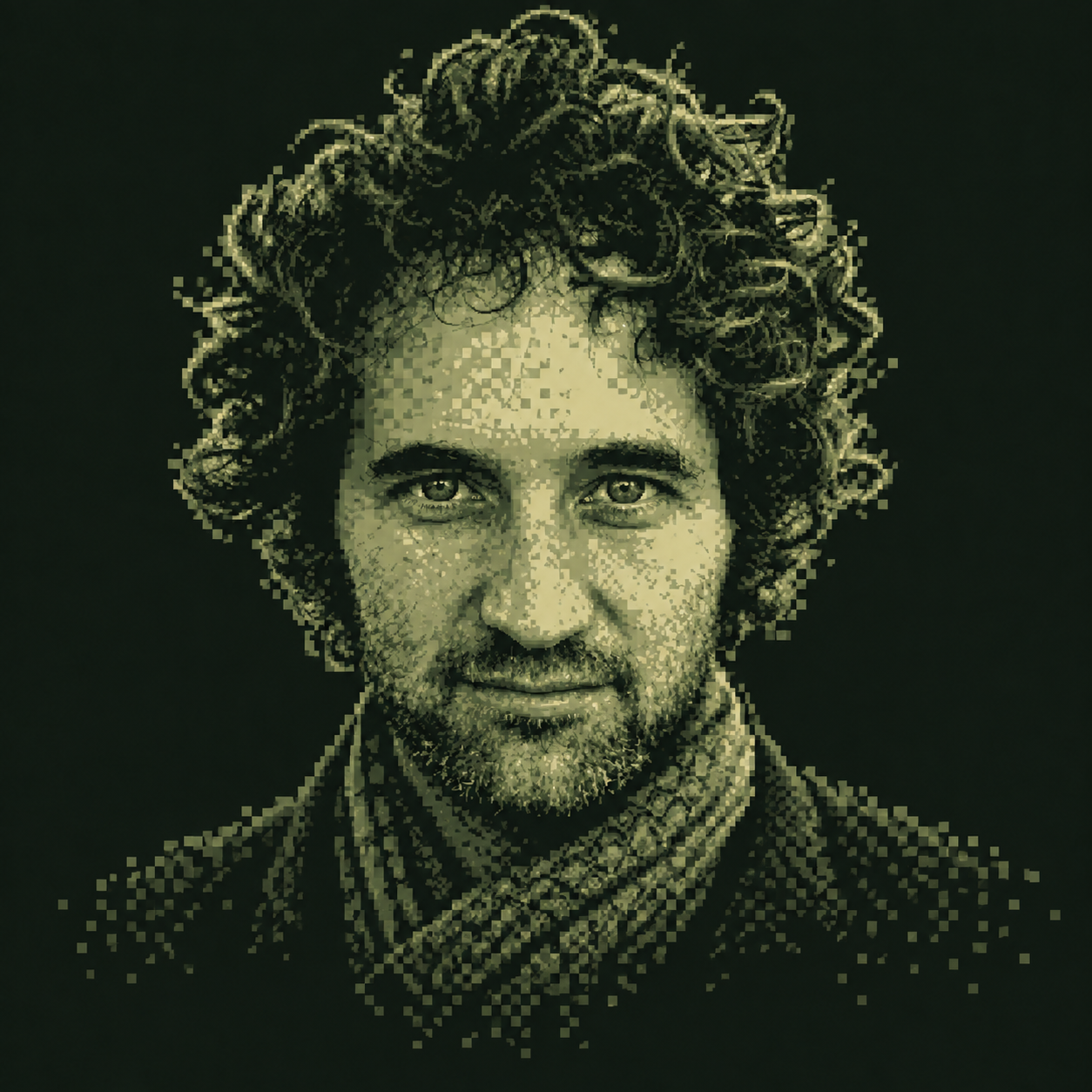
Rafael Pass
The team discusses L2 scaling and points to Rafael Pass’s consensus research. Simplex, co-authored with Benjamin Chan, studies Byzantine agreement under specific network and participant assumptions. Applying it to Pearl would require a concrete design; expertise alone does not establish an implemented L2. The Simplex paper ↗
03 / FOLLOW THE MONEY
Who pays for cheaper inference?
Research edition / 22 September 2026
Follow the money all the way to the customer.
THE COST BASEHardware.
Power.
Serving.
Power.
Serving.
THE OPERATORInference
provider↑ Possible mining receipts
provider↑ Possible mining receipts
THE CUSTOMERA price
for an
answer.
for an
answer.
The bill still exists.
Hardware, power and serving overhead must be paid.
Rewards may help.
Mining receipts could offset costs. Their value and likelihood can change.
Savings need a route.
Competition and provider pricing determine whether customers benefit.
What would break the optimistic case?
Weak useful demand, falling reward value or extra overhead could erase the advantage. More inference revenue also does not guarantee token purchases: the September AMA explicitly discusses providers selling mined rewards or choosing not to buy tokens.
September AMA, around 47–49 minutes ↗Editorial explanation, not a return forecast. Model and assumptions ↗
INSIDE THE ENGINEERING
Give the GPU
less time to wait.
Research file / reviewed 22 September 2026
A faster kernel is a scheduling story: keep data arriving, keep computation moving, and make room for the next operation.
Pearl’s grouped-GEMM article describes work on Mixture-of-Experts models, where tokens are routed to different experts. Combining small matrix operations helps use GPU capacity that separate launches can leave idle.
ENGINEERING NOTE / AKeep the work moving.
LOAD
ABC
COMPUTE
ABC
WRITE
ABC
TIME →
Make room.
Reduce shared-memory use so more upcoming data can stay in flight.
Move data efficiently.
Adjust weight loads to feed computation with fewer interruptions.
Overlap the work.
Begin the next computation while the previous result is being handled.
THE TOOLING THREAD
Agents in the optimization loop.
The team describes an agent-assisted port to CuTe DSL, techniques drawn from Quack, and a day-long optimization loop. The reported gain reaches 15% over its best tested baseline on selected shapes, mainly small decode workloads.
Company-reported kernel results; not a universal end-to-end serving improvement. Tests use selected MoE gate/up shapes inside CUDA graphs.
Read the engineering account ↗Our read. This gives the AMA’s agent-integration thesis a concrete engineering counterpart. The next story is whether the tooling becomes reusable across other teams’ stacks.
Follow this thread further
Watch for a released optimization tool, a reproducible benchmark harness, upstream contributions and integrations documented by other teams.
The team’s agent-integration thesis ↗04 / THE OPEN CASE
The thesis.
The missing evidence.
Four parts of the thesis, the assumptions behind them, and the developments to watch.
Inference demand grows.
The thesis: inference revenue makes useful workloads economically attractive.
The assumption: real customer demand and competitive performance cover operating costs.
What to watch: paid workloads, utilization, and repeat customers—not downloads alone.
Inspect the current proxy ↗Integration becomes easy.
The evidence: the supplied AMA describes a drop-in ambition and near-zero overhead in internal benchmarks.
The gap: a technical claim does not establish broad production adoption.
What to watch: named deployments and independent, reproducible comparisons.
Read the team’s explanation ↗Inference supports token demand.
The thesis: the team has described using inference margins to absorb emissions.
The assumption: sufficient profitable demand and actual purchasing behavior.
What to watch: a disclosed mechanism and observable execution; revenue alone does not guarantee token purchases.
Track the open promises ↗The protocol earns trust.
The evidence: open research and code make inspection possible.
The counterweight: the July MoE incident shows why implementation and review matter.
What to watch: independent review, incident resolution, and activation evidence.
Follow the incident record ↗The model archive
EXHIBIT E · SCALE, NOT ADOPTIONFour published model artifacts, preserved with their archived download totals. How Hugging Face counts downloads ↗
Historical snapshot · capture date not recorded. Downloads count selected file requests, not unique users or customers; they do not establish current adoption. See current model data ↗
Open the archived organization & activity notes
Org: pearl-ai
Members10
Followers46
PlanTeam
VerifiedNo
Organization metadata from the archived public snapshot.
Activity in the archived snapshot
Jun 16vision support added
Jun 18MoE checkpoint published
Jun 28benchmark results added
Three activity entries preserved from the earlier review; this is not a live development feed.
The MoE tie-in
ModelQwen3-30B-A3B
TypeMixture-of-Experts
PublishedJun 11, 2026
This is the actual checkpoint behind the "MoE hard fork" already tracked on Case Status — a real model, not just a protocol change.